
Expedition Date: January
Location: Bermuda Aquarium, Museum & Zoo
Expedition Description: P2 Island Homes: Animals and their Habitats
Get ready, P2 explorers! Join BAMZ and BEN for an exciting hands-on adventure discovering Bermuda’s amazing habitats and the animals that live there. Students will explore the ocean, rocky shore and island forest as they visit the Aquarium, Zoo, Micro Forest and Natural History Museum. Along the way, they will observe, compare and describe different plants and animals and discover how living things are specially adapted to survive in their environments.
Students will:
- Explore and identify local habitats
- Compare plants and animals in different environments
- Discover how animals survive using camouflage, body coverings, and movement
- Use descriptive vocabulary to talk about what they see
Curriculum Links
- 2Be.01 – Know that an environment in which a plant or animal naturally lives is its habitat
- 2Be.02 – Know that different habitats contain different plants and animals
- 2Be.03 – Identify similarities and differences between local environments
- 2Bs.01 – Compare how animals are similar and different in their external body parts and skin covering
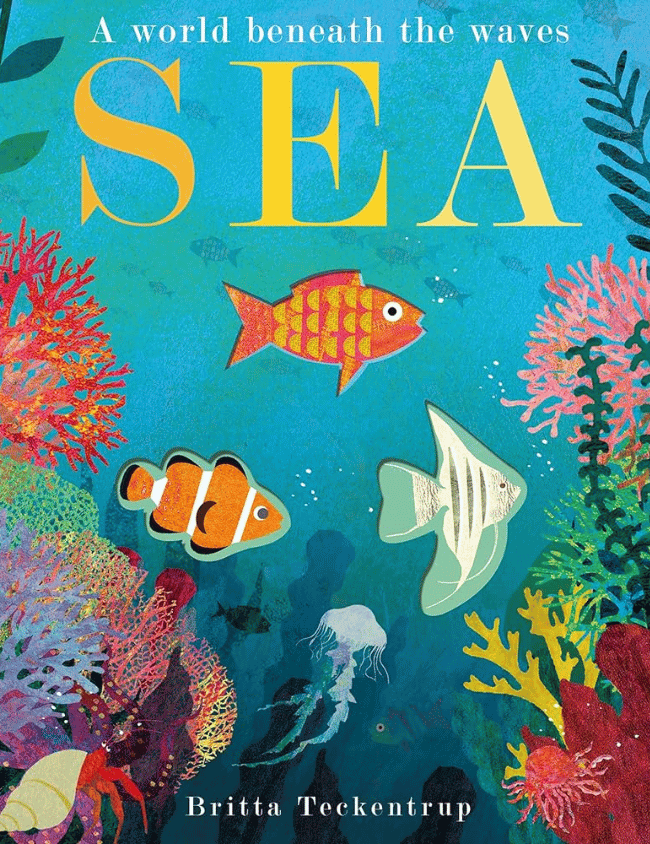
A free copy of the Mentor Text is provided at the expedition: SEA by Britta Teckentrup
Vocabulary Voyage
The P2 Living Things thematic unit is built around the mentor text SEA by Britta Teckentrup, supporting ELA curriculum-aligned literacy learning alongside an experiential school visit with AgraLiving as part of the Horizons Programme.
The Vocabulary Voyage offers a set of optional resources designed to enrich language learning in an engaging and practical way. Three short, flexible vocabulary activities encourage pupils to develop language through through small-group discussion, collaboration and creative thinking. Two additional independent writing tasks, linked to the theme of the unit, provide structured opportunities for pupils to apply new vocabulary in meaningful written contexts.
These resources ssupport oral language development, vocabulary growth, comprehension, and writing skills, while remaining easy to incorporate into short literacy blocks or small pockets of classroom time.
Mini Activities
Writing Activities
Mentor Text
Teacher Information